New Zealand Seed Potato Certification Authority – October 2026
A friendly reminder to seed growers to please submit entries as early as practicable. Thank you for the excellent standard of applications last season. We look forward to working with you for another growing season.
Please arrange for field inspections according to the timings below:
Field Inspection Timings
First Inspection – Before row closure
Second Inspection – Between flowering and
haulm destruction
Third Inspection – Before haulm destruction
In this Issue:
- Fee increase for the 2026-27 seed year
- Annual crop registration
- PVY Awareness
- Bacterial Surveillance
- G2 Virus testing guideline
- Contact details
Fees for the 2026-27 Seed Potato Certification Year
To protect your service quality, we are proposing a cost recovery adjustment – $305 to $311.
- Current rate has remained unchanged since 2019
- Cost of delivering has increased – CPI avg 3.7%
- Proposing a 2% increase
- Inspection fee goes from $250 to $255
- Admin fee goes from $55 to $56
- Management will then undertake a full review reporting back to the Seed Authority and Board in 2027 – 2028
The entry fee for “standard” entries (i.e., those where field and tuber inspections are carried out by AsureQuality or Potatoes New Zealand) will be $311 plus GST per hectare.
Annual Crop Registration
Each seed line must be registered annually. Production site registration must be completed within 21 days of planting.
Growers must complete the current ‘Application for seed potato certification’ form (Application for Seed Potato Certification Form EXCEL (Aug 2021) or Application for Seed Potato Certification Form WORD (Aug 2021)). This form can be completed on excel format (preferred option) or hard copy and emailed to Potatoes New Zealand (avoid sending the form by courier as it will take longer to process).
A reminder to supply a Farm Map with the GPS coordinates/location of the paddock (if provided with PCN registration farm map not required for seed registration) and a Plot Map ensuring that each entry is clearly marked with the variety name, harvested generation, and seed sown reference number (if available).
Completed Application for Seed Potato Certification forms can be emailed to any one of the Potatoes New Zealand staff email addresses as below.
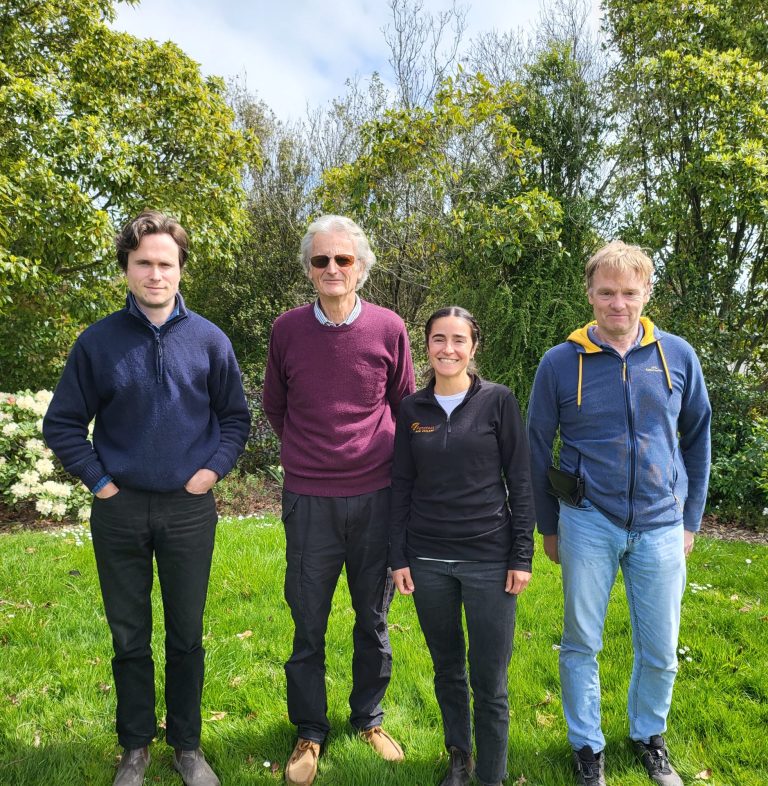
Cyril Hickman
Email: [email protected]
Tristan Hickman
Email: [email protected]
PVY Awareness and Aphid Flights
Last season saw a higher than usual number of seed lines rejected for PVY. Although the 2025 Virus Survey indicated PVY levels have remained steady at around 20% of crops infected at a low incidence, it is important to remember that rates of infection can vary each season dependent on a number of factors. Also last season, high aphid counts were reported in Canterbury, particularly early in the season – around October. Aphids are a powerful vector for PVY, so it is important to maintain awareness of flights as the season progresses.
FAR run an aphid monitoring website called AphidChat, which reports aphid counts from traps around the country. The traps are located in cereal crops, so the aphids being caught may be species more attracted to other arable crops other than potatoes, but these data may still be indicative of when aphids are most active.
Bacterial Surveillance
Potatoes New Zealand will implement an ongoing bacterial surveillance programme funded by the biosecurity budget. This surveillance will require sampling of potato plants symptomatic of blackleg and submission of sample into AsureQuality laboratory for species identification.
Sample plants will be taken providing permission has been granted by the grower and the sample plants will be submitted to the laboratory anonymously.
G2 Virus Testing Guideline
Two sampling options depending on the size of the G2 plots:
- Option A Collect 1 leaf from 100 plants and test 10×10 (10 tests). 10 bags of 10 leaves each, 100 leaves total.
- Option B Collect 1 leaf from 10 separate plants and test 1×10 (10 tests). 1 bag of 10 leaves, 10 leaves total.
If the plot has more than a 100 plants: Option A
If the plot has less than a 100 plants: Option B
If more than one sample tests positive, then the line must be removed from the scheme.
If one sample tests positive, then the G2 label must be endorsed “Failed G2 virus test” and the seed line will be subject to a compulsory virus test at G3. The G3 line is subject to the same criteria as G2 lines. Repeated failure will require virus test on the following generations. The seed line will not be eligible to be tagged as certified seed until the virus test returns negative.
If the G2 virus test is missed completely, the seed line will be subject to a compulsory virus test at the next generation and the G2 label will be endorsed with “Virus test not completed”. If the virus test is missed again at G3 the seed line will be removed from the scheme.
Key Contacts
Cyril Hickman – Seed Scheme Manager and Inspector
Mobile: 027 276 6664
Email: [email protected]
Tristan Hickman – Seed Scheme Inspector
Mobile: 027 233 3865
Email: [email protected]