From Ideas to Action: Research Focus for 2026
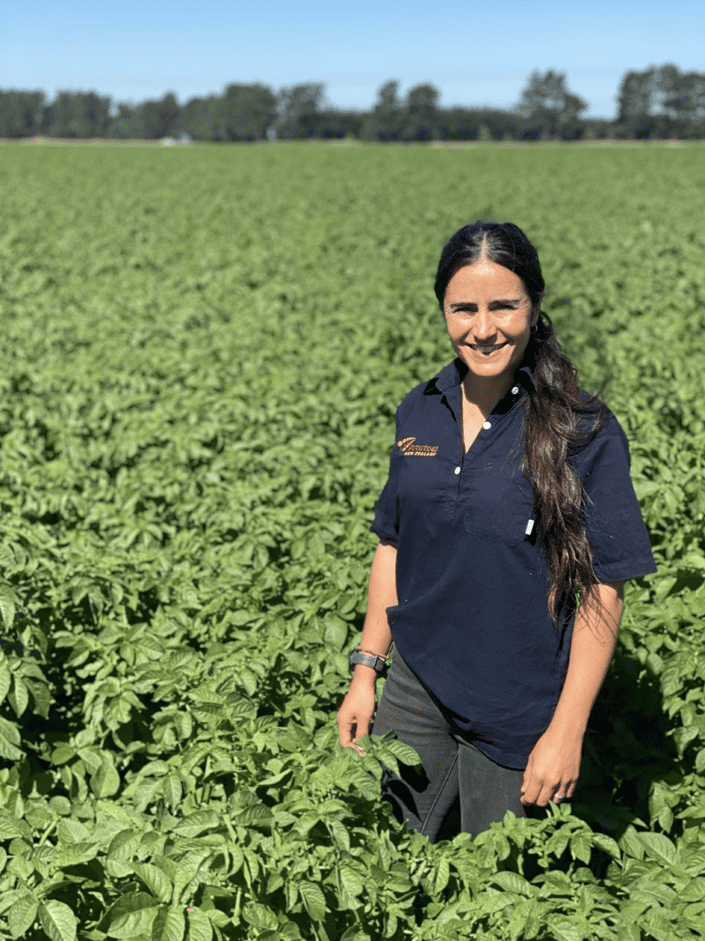
Written by Paula Lleras, Research and Development Project Manager
Research and development (R&D) play a vital role in supporting potato growers to farm productively, sustainably, and with confidence. By focusing on real on-farm challenges, R&D helps growers improve yields and quality, manage pests and diseases, reduce risk, and adapt to changing environmental and market conditions.
This year, we marked the retirement of Iain Kirkwood, who has made an outstanding contribution to Potatoes New Zealand (PNZ) and the wider horticulture industry. Over the course of his career, Iain’s work has had a meaningful and lasting influence on the sector. His departure opened the door for me to step into the role of R&D Project Manager, transitioning from my previous position as R&D Assistant. I value the experience and knowledge gained from working alongside Iain and am keen to carry this forward as I take on new responsibilities and look ahead to the challenges and opportunities of this role.
In 2025, Potatoes New Zealand completed a consumer research project across fresh, processed, and crisp categories. The research was followed by stakeholder and grower workshops to identify activities that could help increase consumption and grow the category. This project provided valuable insights into how we can move forward as an industry, particularly in relation to more forward-looking, horizon-type projects.
We are now working on a draft Potatoes New Zealand Research and Development strategy, which is still in its early stages. The intention is to widen the focus beyond pests and diseases to include areas such as on-farm profitability, waste-stream management, and other potential projects. The aim is to identify the critical issues facing the industry now, as well as those that will be important in the future. Potatoes New Zealand will be engaging with our growers to identify and prioritise the main challenges and opportunities.
The goal is to listen, enable, and promote better outcomes for the New Zealand potato industry by driving research that transforms science into practical solutions for growers.
As we move into 2026, collaboration across the whole industry is becoming increasingly important. The Ministry for Primary Industries is driving this message, aiming to engage and enable change for vegetables. Work on a wider Vegetable Group R&D strategy is underway as we collaborate across projects.
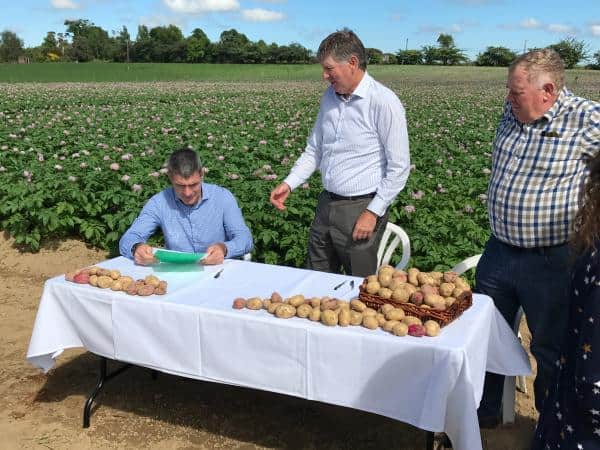
Potatoes New Zealand has been working across the vegetable sector, collaborating in joint R&D projects, mostly around the Pukekohe Research and Demonstration Farm. The Paul Horne Tour and the Zebra Chip Seminar are examples of these joint activities, delivering insights into Integrated Pest Management (IPM) strategies and opportunities for improved pest management, as well as the latest research updates on Tomato Potato Psyllid (TPP) and Candidatus Liberibacter solanacearum (CLso), offering growers practical management guidance.
Current projects at the Vegetable Industry Centre of Excellence (VICE) include the Sustainable Vegetable Systems (SVS) in Potatoes, which demonstrates the modelling of the SVS Tool and how it can be used to support grower decision-making; the mound integrity trial for control of Potato Tuber Moth (PTM), which investigates different management practices to reduce soil cracking and prevent PTM infestation; and ground-truthing of BioScout spore units to assess how this AI-driven spore monitor can be used in vegetable crops to combat pests and diseases.
Smart insect trapping work delivered in sweetcorn at VICE last season provided acceptable accuracy levels (87%), allowing for a significant decrease in data delivery times and faster decision-making. These AI-driven insect traps are now being evaluated against conventional pheromone traps previously used to monitor PTM. The objective is to assess the performance and effectiveness of smart traps compared to traditional monitoring tools.
We are about to start an Early Blight research project to evaluate alternative crop protection products and assess the effectiveness of crop protection programmes that utilise these options.
Powdery Scab remains a persistent challenge in the potato industry, so we are continuing field trials of a compound (Copper Gluconate) that stimulates premature germination of resting spores in the absence of a host, reducing the pathogen’s presence in soil over time and disrupting zoospore migration preventing them from locating their potato host roots.
TPP and CLso management is another priority. Through the Canterbury Potato Liberibacter Initiative, many projects have been delivered, and our knowledge has grown. However, we still have not found a cost-effective solution to TPP and CLso in potato crops. An IPM trial is currently underway to establish a 10-hectare commercial production site in Canterbury, based on a strict IPM approach.
As we look ahead, our commitment remains clear: to deliver research that empowers growers with practical, science-based solutions. The challenges facing our industry are complex, but through collaboration, innovation, and a shared vision, we can build a resilient and sustainable future for New Zealand potatoes. We invite all stakeholders to engage with Potatoes New Zealand, share ideas, and be part of shaping the next chapter of the industry’s success.